



Can ‘Good’ Cholesterol Improve Root Canal Treatment?
HDL reduced inflammation after dental procedures in animals
In Brief:
- Researchers treated infected teeth with “good” cholesterol during root canal treatment in animals.
- The treatment performed as well as current methods in reducing inflammation and bone loss, suggesting the approach may help better repair and preserve teeth.
When a cavity becomes so deep that it reaches the living tissue pulp—nerves and blood vessels—inside a tooth, dentists may call for a root canal treatment to save it. Root canal treatment is one of the most common dental procedures, with 15 million performed each year in the United States. Unfortunately, for some patients, the procedure alone may not be enough to prolong the tooth’s life.
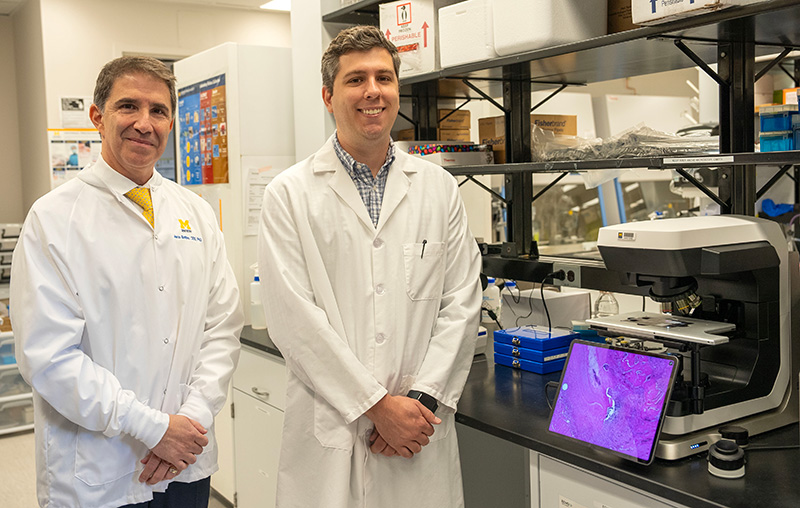
Now, researchers in an NIDCR-supported study have tested a treatment that uses lab-made high-density lipoprotein (HDL), or “good” cholesterol, for root canal treatment. HDL is made by the body as a natural anti-inflammatory and is known for its heart-related benefits. The scientists showed that lab-made HDL reduced inflammation after root canal treatment in rats. The results, published in the International Journal of Oral Science, suggest that adding lab-made HDL during root canals may be a way to better repair and preserve teeth.
“Because HDL functions in the body as a sponge, scavenging toxins and resolving inflammation, we believe it can shift a pro-inflammatory infection process to an anti-inflammatory one by directing the body to facilitate its own healing,” said senior author Marco Bottino, D.D.S., Ph.D., of the University of Michigan.
In a typical root canal treatment, a dentist drills out the diseased or dead tissue, cleans the area, treats the infection, fills the root canal space, and restores the tooth. However, in some cases, when inflammation and infection around the tooth’s root persist, the bone that holds the tooth in place can break down. This damage can cause the tooth to become loose or allow the infection to spread, which may require more treatment.
Dr. Bottino and lead author Renan Dal Fabbro, D.D.S., Ph.D., a postdoctoral fellow in the lab, knew that some materials used in the procedure can irritate living tissue and may prolong inflammation. One such material is sodium hypochlorite (or household bleach), which dentists use to clean the root canal. Another is calcium hydroxide, which helps disinfect the root canal for a longer period. The scientists sought alternatives that are safe to use, easier to apply, and may better promote healing.
The team decided to test a lab-made version of a nontoxic compound already made by the body: HDL. They got the idea from Anna Schwendeman, Ph.D., a collaborator from the University of Michigan College of Pharmacy, who had crafted lab-made HDL for her research on HDL’s anti-inflammatory effects on blood vessels and the heart.
First, the researchers examined mouse immune cells exposed to parts of bacteria that typically activate the immune system. When the team added lab-made HDL along with the bacteria pieces, the immune cells emitted fewer inflammatory beacons, demonstrating HDL’s anti-inflammatory properties.
Then, the team subjected the immune cells to a protein that normally turns the cells into bone-digesting cells. When they added lab-made HDL to the immune cells, they formed fewer bone-digesting cells. The findings show that lab-made HDL can reduce the formation of the cells that break down bone tissue.
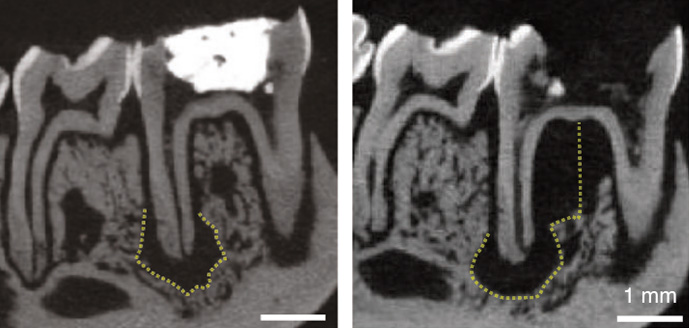
Finally, the team tested the ability of lab-made HDL to improve root canal treatments in rats by comparing it to the standard treatment using bleach and calcium hydroxide. They found that lab-made HDL treatment was comparable to the standard therapy in reducing bone loss. Additionally, teeth treated with bleach and lab-made HDL had fewer pro-inflammatory immune cells in the root tissue than those treated with bleach and calcium hydroxide, indicating less inflammation in the lab-made HDL-treated teeth.
The findings show that lab-made HDL, with its anti-inflammatory properties, might be an alternative to the current use of bleach and calcium hydroxide in root canal therapy. Before testing lab-made HDL for root canal treatment in people, the researchers need to test it in larger animal studies and monitor the success of these procedures over time.
“Historically, the purpose of a root canal is to treat an infection and stop further damage to the tooth and other tissues,” said Dr. Dal Fabbro. “With updated techniques, we may one day be able to improve our processes and even reverse the damage from infection.”
Related Link
Reference
Dal-Fabbro R, Yu M, Mei L, Sasaki H, Schwendeman A, Bottino MC. Synthetic high-density lipoprotein (sHDL): a bioinspired nanotherapeutics for managing periapical bone inflammation. Int J Oral Sci. 2024 Jul 2;16(1):50. doi: 10.1038/s41368-024-00316-w.
Attention Editors
Reprint this article in your own publication or post to your website. NIDCR News articles are not copyrighted. Please acknowledge NIH’s National Institute of Dental and Craniofacial Research as the source.
July 2025