U.S. flag

An official website of the United States government

Here’s how you know

Dot gov

Official websites use .gov
A .gov website belongs to an official government organization in the United States.

HTTPS

Secure .gov websites use HTTPS
A lock (LockA locked padlock) or https:// means you’ve safely connected to the .gov website. Share sensitive information only on official, secure websites.

 
NIH National Institute of Dental and Craniofacial Research (NIDCR) Home page
  • Health Info
  • Research
  • Grants & Funding
  • Careers & Training
  • News & Events
  • About Us
  • Health Info
    • Publications
    • Clinical Trials
    • Data & Statistics
    • Finding Dental Care
  • Research
    • Research Conducted at NIDCR (Intramural)
    • Conducting NIDCR Clinical Research
    • Clinical Trials
    • Data & Statistics
    • Scientific Data Sharing
    • Research Priorities
    • Research Investments & Advances
    • Oral Health in America Report
    • COVID-19
  • Grants & Funding
    • Notices of Funding Opportunities
    • Grant Programs and Contacts
    • Funding Priorities
    • Funded Research
    • Scientific Data Sharing
  • Careers & Training
    • Research Training at NIDCR (Intramural Opportunities)
    • Funding for Research Training (Extramural Opportunities)
    • Job Openings
    • Loan Repayment
    • Staff Contacts
  • News & Events
    • NIDCR News
    • Newsletter
    • Grantee News
    • Events
    • Images
    • For Reporters
  • About Us
    • Leadership & Staff
    • Advisory Committees
    • Strategic Plan
    • Oral Health in America Report
    • Congressional & Budget
    • Job Openings
    • Getting to NIDCR
    • Contact Us
    • Mission
  • Conducting NIDCR Clinical Research

Breadcrumb

  1. Home
  2. News & Events
News & Events
  • NIDCR News
  • Newsletter
  • Grantee News
  • Events
  • Images
  • For Reporters
NIDCR EMAIL UPDATES 
Subscribe to receive NIDCR emails

NIDCR Digital Library

The NIDCR Digital Library provides images that are free to use with credit. Images are meant for use by the science and health community, the press that covers health and science, teachers and other educators in health and science, and non-profit organizations that produce health and science information. It is not intended for commercial use.
 

Displaying 21 - 30 of 42

Media ID#: 22841

Therapy for rare bone disorder shows promise in NIH clinical trial
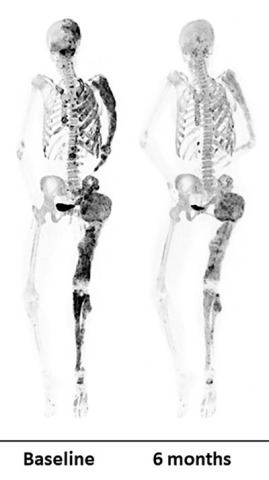
Bone scans of a patient before (left) and after (right) a six-month denosumab treatment show reduced turnover within fibrous dysplasia lesions (dark-colored patches).
Download

Bone scans of a patient before (left) and after (right) a six-month denosumab treatment show reduced turnover within fibrous dysplasia lesions (dark-colored patches).
Click to view
ID#: 22841
Therapy for rare bone disorder shows promise in NIH clinical trial

The medication, denosumab, is the first to reduce bone-weakening process in patients with fibrous dysplasia. Bone scans of a patient before (left) and after (right) a six-month treatment show reduced turnover within fibrous dysplasia lesions (dark-colored patches). 

Asset type: Scientific Image
File size: 31.75 KB
File type: image/jpeg

Alison Boyce, NIDCR

Download

Media ID#: 22906

Oral pathogen invasion of human gum cells
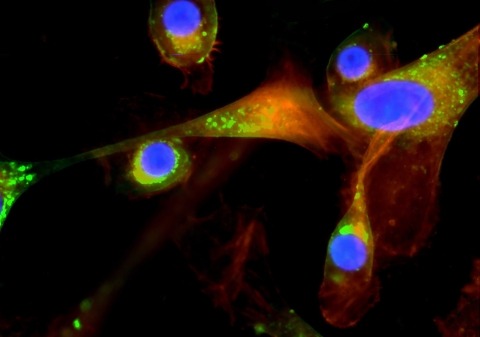
Oral pathogen P.gingivalis invasion of human gum cells
Download

Oral pathogen P.gingivalis invasion of human gum cells
Click to view
ID#: 22906
Oral pathogen invasion of human gum cells

The images (1-3) depict the cell-to-cell translocation of P. gingivalis through host actin fibers after 1 day post-infection in human primary gingival epithelial cells using fluorescence microscopy.

Asset type: Scientific Image
File size: 1.05 MB
File type: image/jpeg

Özlem Yilmaz, Medical University of South Carolina

Download

Media ID#: 22911

Oral fungal pathogen attaches to another fungus
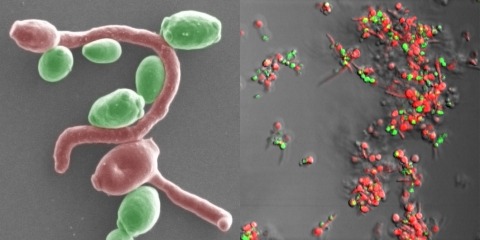
The oral fungal pathogen
Download

The oral fungal pathogen
Click to view
ID#: 22911
Oral fungal pathogen attaches to another fungus

Yeast cells of Candida glabrata (green) adhere to Candida albicans hyphae (red) both in static culture (left, scanning electron microscopy) and under biofilm conditions of flow (right, confocal fluorescence microscopy).

Asset type: Scientific Image
File size: 6.51 MB
File type: image/jpeg

Edgerton Lab, State University of New York at Buffalo

Download

Media ID#: 22916

A census inside your mouth
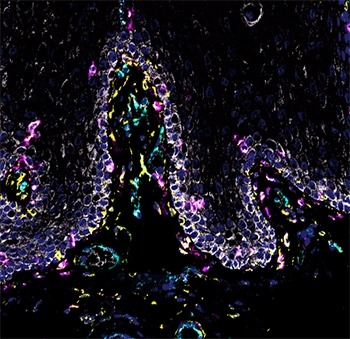
Different cell types inside the mouth.
Download

Different cell types inside the mouth.
Click to view
ID#: 22916
A census inside your mouth

NIDCR researchers catalogued functions and subtypes of the four main categories of oral mucosal cells, including epithelial (white), endothelial (cyan), stromal (yellow), and immune cells (pink), as shown in this photo of buccal (cheek) tissue from a healthy volunteer.

Asset type: Scientific Image
File size: 166 KB
File type: image/jpeg

Drake Williams et al., 2021

Download

Media ID#: 22926

FDMAS-skull.mp4

Video file
Download

Click to view
ID#: 22926
FDMAS-skull.mp4

Fibrous Dysplasia/McCune Albright Syndrome (FD/MAS) is a rare disorder of the skeleton, skin, and endocrine system. FD/MAS bone lesions can cause the skeleton to expand, as shown in this 3D rendering of a patient’s skull. 

Asset type: Video, Scientific Image
File size: 402.12 KB
File type: video/mp4
Credit

Alison Boyce, NIDCR

Download

Media ID#: 22931

Dental stem cells form dentin, pulp, and blood vessels
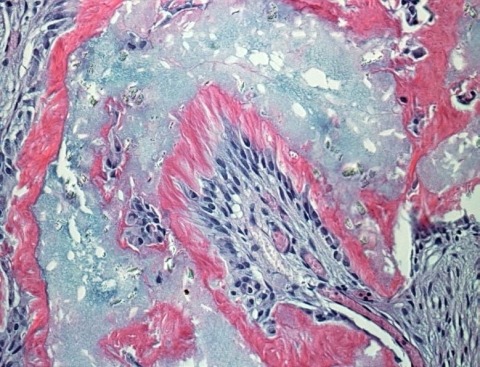
Dental stem cells form dentin, pulp, and blood vessels.
Download

Dental stem cells form dentin, pulp, and blood vessels.
Click to view
ID#: 22931
Dental stem cells form dentin, pulp, and blood vessels

Stem cells, which can transform into other cell types, raised early hopes that they might revolutionize repair of teeth and oral tissues, and possibly lead to new therapies for diabetes, heart disease, and neural conditions.

Asset type: Scientific Image
File size: 176.38 KB
File type: image/jpeg

Pamela Robey, NIDCR

Download

Media ID#: 22936

Scribble scrabble

Organization of human salivary stem/progenitor cells.
Download

Organization of human salivary stem/progenitor cells.
Click to view
ID#: 22936
Scribble scrabble

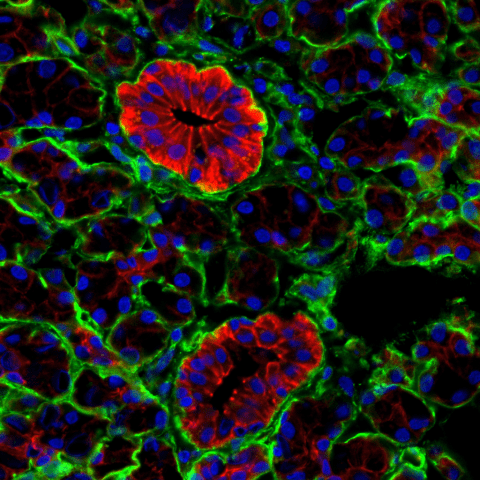
Organization of human salivary stem/progenitor cells (hS/PCs) expressing scribble (red) and β1 integrin (green) in our 3D culture system is a critical step in our mission to assist in the relief of xerostomia, or dry mouth, in head and neck cancer patients who have received radiation treatment.

Asset type: Scientific Image
File size: 2.13 MB
File type: image/png

Danielle Wu, Farach-Carson Lab at Rice University

Download

Media ID#: 22941

Taste buds permeation
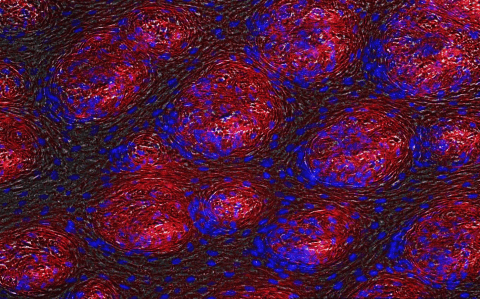
Taste buds on the tongue with permeated red labelled nano-particles.
Download

Taste buds on the tongue with permeated red labelled nano-particles.
Click to view
ID#: 22941
Taste buds permeation

Taste buds on the tongue with permeated red-labelled nano-particles.

Asset type: Scientific Image
File size: 3.53 MB
File type: image/png

Privo Technologies

Download

Media ID#: 22946

Sensory nerve of the mouse incisor
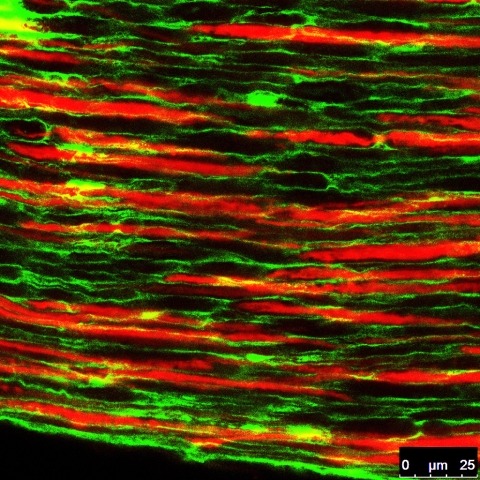
Sensory nerve of the mouse incisor.
Download

Sensory nerve of the mouse incisor.
Click to view
ID#: 22946
Sensory nerve of the mouse incisor

Sensory nerve marker CGRP staining (green) of the inferior alveolar nerve in adult mouse incisors.

Asset type: Scientific Image
File size: 1.75 MB
File type: image/jpeg

Hu Zhao et al., 2014

Download

Media ID#: 22951

Molecules and neurons responsible for sense of touch
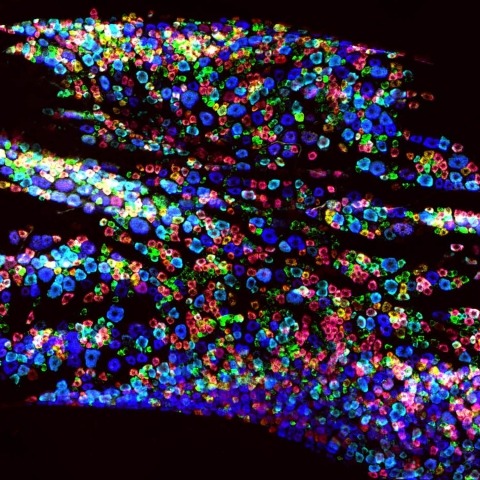
Trigeminal ganglion nerves
Download

Trigeminal ganglion nerves
Click to view
ID#: 22951
Molecules and neurons responsible for sense of touch

NIDCR and NCCIH researchers developed an novel strategy or classifying neurons: single cell RNA-sequencing, which defines neurons according to the expression of hundreds of genes, and in vivo functional imaging, which characterizes groups of neurons according to their activity. 

Asset type: Scientific Image
File size: 434.78 KB
File type: image/jpeg

Lars von Buchholtz and Nima Ghitani et al., 2020 

Download
  • Go to first pageFirst
  • Go to previous pagePrevious
  • Page 1
  • Page 2
  • Currently on page 3
  • Page 4
  • Page 5
  • Go to next pageNext
  • Go to last pageLast
NIH
  • Home
  • Web Policies
  • Privacy
  • Contact Us
  • Freedom of Information Act
  • No Fear Act
  • Office of Inspector General
  • HHS Vulnerability Disclosure
  • Employee Intranet - Staff Only
Back to top