



Craniofacial Anomalies & Regeneration Section: Meet the Team
Dr. Janice Lee – Principal Investigator
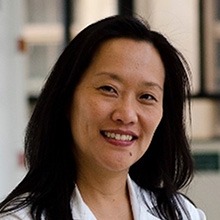
I received my D.D.S. and M.S. in oral biology from the University of California, Los Angeles School of Dentistry and my M.D. from Harvard Medical School. I completed my residency in general surgery and oral and maxillofacial surgery at Massachusetts General Hospital, following which I was a postdoctoral fellow at NIDCR. I subsequently joined the faculty at University of California, San Francisco, where I became a Professor of Clinical Oral and Maxillofacial Surgery and was recruited back to NIDCR, where I am now the Clinical Director and Chief of the Craniofacial Anomalies and Regeneration Section (CARS). In September 2020, I was appointed as the Deputy Director for Intramural Clinical Research to support clinical research and clinical researchers and clinicians at NIH.
Dr. Olivier Duverger – Staff Scientist
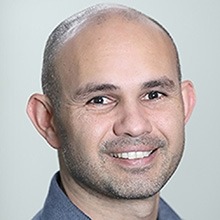
My work at NIDCR has been to study dental and craniofacial anomalies in rare diseases, building my basic science projects in close connection with clinical conditions seen at the NIDCR Dental Clinic. My broad interest is to unravel the mechanistic link between dental/craniofacial anomalies and other clinical manifestations featured in syndromes.
I obtained my Ph.D. in molecular and cellular developmental biology from the University Pierre et Marie Curie (Paris, France). My graduate research focused on the function of stress proteins in skin and hair development. After my Ph.D., I worked for two years as a project manager in the Research and Development department of the LVMH Group (Perfumes and Cosmetics). I then joined the National Institute of Arthritis and Musculoskeletal and Skin Diseases as a visiting fellow to study the molecular and cellular mechanisms underlying hair and tooth anomalies in a form of ectodermal dysplasia. In 2017, as my research increasingly focused on tooth development and pathologies of the dentition, I was recruited by the National Institute of Dental and Craniofacial Research as a Staff Scientist.
Dr. Nadine Almpani – Staff Clinician
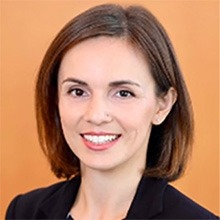
I feel passionate about clinical research that has a direct impact in clinical practice, and my research interest is focused on the field of craniofacial development. My long-term goal is to unravel the role of the different anatomical craniofacial modules in the development of dentoskeletal malocclusion, as well as to design risk assessment or growth prediction models associated with this phenotype.
My academic training as an orthodontist provided me with an excellent background in the study of the craniofacial complex. Moreover, during my Clinical Research Fellowship at NIDCR, I acquired valuable experience and new skills in clinical research within my field of interest. Currently, I continue to work as part of the Craniofacial Anomalies and Bone Regeneration Section as a Special Volunteer, on rare disease cohorts, as well as healthy normative groups. With the use of three dimensional skeletal and soft tissue data from these cohorts, and in-depth quantitative assessment techniques, I aspire to achieve my aims and contribute to the advancement of clinical orthodontics.
Dr. Bikash Lamichhane – Research Fellow
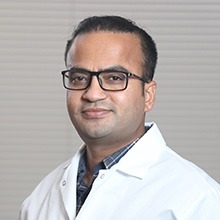
My research interest lies in understanding the cellular and molecular mechanism of genetic defects in mineralized tissues. I am a dentist from NepaI and hold a Bachelor of Dental Surgery degree from Kathmandu University. After several years of clinical practice in Nepal, I pursued a Ph.D. in oral and craniofacial biomedical sciences at Texas A&M University School of Dentistry, Dallas, Texas, and graduated in December 2022. My graduate research focused on understanding the cellular and molecular mechanism of bone and tooth defects in murine models. After working briefly as a postdoctoral research associate in my previous institution, I joined the CARS lab at NIDCR as a visiting postdoctoral fellow in August 2023. Currently, my research focus is on the craniosynostosis and tooth phenotype in Loeys-Dietz syndrome. I like to play soccer during the weekends.
Dr. Rafaela Stocker Salbego – Clinical Research Fellow
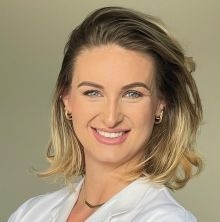
I received my dental training in Brazil at the Federal University of Santa Maria, with advanced specialty training in prosthodontics, and temporomandibular disorders and orofacial pain. I earned both my master’s and doctoral degrees from the University of São Paulo, at the Bauru School of Dentistry, where I developed a strong foundation in academic and scientific research with a particular emphasis on orofacial pain. Throughout my career, I have built substantial expertise in clinical pain assessment, psychophysical testing, and the investigation of factors that influence pain perception and modulation, encompassing sensory, clinical, and psychosocial dimensions. My research focuses on understanding individual variability in pain experiences and endogenous pain modulation mechanisms. To this end, I employ methodologies such as Quantitative Sensory Testing (QST) and Conditioned Pain Modulation (CPM) to characterize sensory profiles in individuals with and without chronic pain. In parallel, my research examines how contextual, cognitive, and emotional factors influence pain responses and pain modulation testing, integrating these dimensions into a comprehensive framework for understanding pain mechanisms. My overarching scientific goal is to contribute to a mechanism-based, individualized approach to pain, supporting phenotyping strategies that advance the understanding, assessment, and clinical management of diverse pain conditions.
July 2026