



Stem Cell Biochemistry Section: Meet the Team
Achim Werner - Principal Investigator
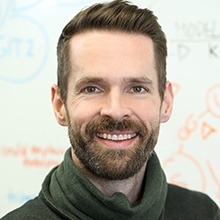
I received my Ph.D. from the International Max Planck Research School for Molecular Biology in Göttingen, Germany. Under the mentorship of Frauke Melchior, I investigated how a particular ubiquitylation enzyme controls actin-based cell shape changes during cell division. As a California Institute of Regenerative Medicine fellow, I then performed my postdoctoral work at the University of California at Berkeley with Michael Rape. I studied the role for ubiquitylation enzymes in human embryonic stem cell (hESC) maintenance and differentiation. By combining mass spectrometry-based approaches with stem cell differentiation assays, biochemical techniques, and ribosome profiling, my work has elucidated a novel pathway that regulates the function of newly synthesized ribosomes to allow stem cells to adopt a neural crest cell fate during differentiation. On the basis of these findings, I was awarded an NIH/NIDCR K99 Pathway to Independence Award in 2015. In 2017, I launched my independent research program at NIDCR.
Jason Collins – Postdoctoral Fellow
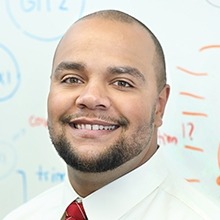
I received my Ph.D. in 2015 from Old Dominion University in Virginia, where I studied protein folding and misfolding using biophysical and high-resolution methods to advance our understanding of the protein folding problem. Prior to coming to NIH, I was a postdoctoral fellow at The Scripps Research Institute, where I studied the biogenesis of the 40S ribosome. My research is currently focused on understanding the mechanism and role of the ubiquitin proteasome system in driving intricate and highly regulated stem cell differentiation programs. We use a wealth of biochemical and molecular techniques to carefully study these mechanisms in detail, aiming to understand how dysregulation or mutations in this critical system lead to developmental disorders and disease.
Youmei Wu – Biologist
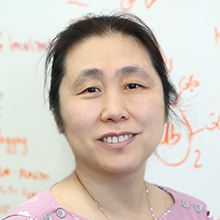
With more than 20 years of experience working in academia and industry, I provide broad support and assistance in managing the smooth operation of the lab as well as basic technical training for newcomers. Working with a group of devoted and enthusiastic scientists also makes it very interesting for me to participate in various projects relating to E3 ubiquitin ligases, their role in stem cell maintenance and differentiation, and the possible impact of their mutation in human development.
Shaun Abrams – Clinical Research Fellow
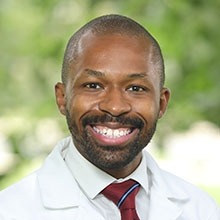
My goal is to become a leading clinician-scientist in the field of craniofacial development and craniofacial anomalies studying the genetic and molecular basis for craniofacial defects in order to develop innovative therapeutic strategies. I completed the D.D.S./Ph.D. program at the University of California, San Francisco in 2020, graduating with honors and inducted into the Omicron Kappa Upsilon National Dental Honor Society. My Ph.D. work in the lab of Dr. Jeremy Reiter uncovered how primary cilia regulate development of the facial midline. I am excited to return to NIDCR as a Dental Clinical Research Fellow to build upon my love for developmental biology sparked during my time at a postbaccalaureate IRTA in the lab of Dr. Matthew Hoffman. Working jointly in the Kerosuo and Werner labs, I am excited to embark upon an exciting scientific adventure identifying novel ubiquitylation pathway components involved in craniofacial bone and cartilage formation from neural crest cells.
Farjad Shafighi – Ph.D. Student
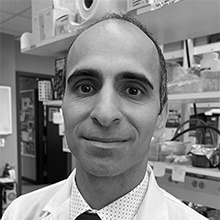
I received my master’s degree in molecular biology from KU Leuven and Vrije University of Brussels, where I focused on purification, characterization, and transient modification of skin-derived mesenchymal stem cells in cell-based therapy of liver diseases. I went on to specialize in directed differentiation of induced pluripotent stem cells (iPSCs) in 2D and 3D cultures focusing on neural differentiation. For my Ph.D. research, I joined the Stem Cell Biochemistry laboratory at NIDCR. My project revolves around using CRISPR/Cas9 methodologies in iPSCs to investigate the role of specific ubiquitylation enzymes in stem cell maintenance and differentiation.
Maya English – Postbaccalaureate Fellow
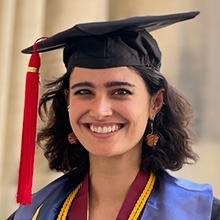
I received my B.S. in biological sciences from Carnegie Mellon University in Pittsburgh, Pennsylvania, where I conducted research on ribosome biogenesis and completed my undergraduate thesis on the role of RNA helicases in the compaction of rRNA domain III. As an NIH IRTA postbac in the Werner lab, I’m interested in understanding how mutations in essential ubiquitylation enzymes can give rise to specific disease phenotypes. I am characterizing several point mutations in the major ubiquitin E1 activating enzyme UBA1, which have been identified in never-smoker lung cancer patients, in order to determine their effects on the expression, localization, catalysis, and interactions of UBA1. In the future, I hope to apply my learning from NIH in pursuit of a Ph.D. in molecular biology and a career in research.
Lab Alumni
Postdoctoral/Clinical Fellows
- David Beck – Genetics Fellow – now Assistant Professor at NYU
- Anthony Asmar – Postdoctoral Fellow – now Staff Scientist at NIST
- Abul Basar – Visiting Fellow – now Scientist at MesoScale
Summer Students
- Eric Mao – Summer Rotation Student
- Jacob Svoysky – Summer Rotation Student
- Victor Ekehchiadi – Dental Summer Student
- Jean Cho – Summer Rotation Student
Publications
- Bunker EN, Le Guerroué F, Wang C, Strub MP, Werner A, Tjandra N, Youle RJ. Nix interacts with WIPI2 to induce mitophagy. EMBO J. 2023 Nov 15;e113491. doi: 10.15252/embj.2023113491.
- Asmar AJ, Abrams SR, Hsin J, Collins JC, Yazejian RM, Wu Y, Cho J, Doyle AD, Cinthala S, Simon M, van Jaarsveld RH, Beck DB, Kerosuo L, Werner A. A tissue-specific ubiquitin switch coordinates early brain, craniofacial, and skin development. Nat Commun. 2023 Jul 26;14(1):4499. doi: 10.1038/s41467-023-40223-y.
- Stiburkova B, Pavelcova K, Belickova M, Magaziner SJ, Collins JC, Werner A, Beck DB, Balajkova V, Salek C, Vostry M, Mann H, Vencovsky J. Novel somatic UBA1 variant in a patient with VEXAS syndrome. Arthritits Rheumatol. 2023 Jul;75(7):1285-1290. doi:10.1002/art.42471. Epub 2023 May 11.
- Le Guerroué F, Bunker EN, Rosencrans WM, Nguyen JT, Basar MA, Werner A, Chou TF, Wang C, Youle RJ. TNIP1 inhibits selective autophagy via bipartite interaction with LC3/GABARAP and TAX1BP1. Mol Cell. 2023 Mar 16;83(6):927-941.e8. doi: 10.1016/j.molcel.2023.02.023. Epub 2023 Mar 9.
- Ferrada MA, Savic S, Ospina Cardona D, Collins JC, Alessi H, Wilson L, Goodspeed W, Topilow JS, Paik JJ, Poulter JA, Kermani TA, Koster MJ, Warrington KJ, Cargo C, Tattersall RS, Duncan CJA, Cantor A, Hoffmann P, Payne EM, Bonnekoh H, Krause K, Cowen EW, Calvo KR, Patel BA, Ombrello AK, Kastner DL, Young NS, Werner A, Grayson PC, Beck DB. Translation of cytoplasmic UBA1 contributes to VEXAS syndrome pathogenesis. Blood. 2022 Sep 29;140(13):1496-1506. doi:10.1182/blood.2022016985.
- Chatrathi HE, Collins JC, Wolfe LA, Markello TC, Adams DR, Gahl WA, Werner A, Sharma P. Novel CUL3 variant causing familial hyperkalemic hypertension impairs regulation and function of ubiquitin ligase activity. Hypertension. 2022 Jan;79(1):60-75. doi: 10.1161/HYPERTENSIONAHA.121.17624. Epub 2021 Dec 2.
- Poulter JA, Collins JC, Cargo C, de Tute RM, Evans P, Ospina Cardona D, Bowen DT, Cunnington JR, Baguley E, Quinn M, Green M, McGonagle D, Beck DB, Werner A, Savic S. Novel somatic mutations in UBA1 cause VEXAS syndrome. Blood. 2021 Jul 1;137(26):3676-3681. doi: 10.1182/blood.2020010286.
- Beck DB, Basar MA, Asmar AJ, Thompson J, Oda H, Uehara DT, Saida K, Pajusalu S, Talvik I, D'Souza P, Bodurtha J, Mu W, Barañano KW, Miyake N, Wang R, Kempers M, Tamada T, Nishimura Y, Okada S, Kosho T, Dale R, Mitra A, Macnamara E; Undiagnosed Diseases Network; Matsumoto N, Inazawa J, Walkiewicz M, Õunap K, Tifft CJ, Aksentijevich I, Kastner DL, Rocha PP, Werner A. Linkage-specific deubiquitylation by OTUD5 defines an embryonic pathway intolerant to genomic variation. Sci Adv. 2021 Jan 20;7(4):eabe2116. doi: 10.1126/sciadv.abe2116.
- Beck DB, Ferrada MA, Sikora KA, Ombrello AK, Collins J, Pei W, Balanda N, Ross DL, Ospina Cardona D, Wu Z, Patel B, Manthiram K, Groarke EM, Gutierrez-Rodrigues F, Hoffmann P, Rosenzweig S, Nakabo S, Dillon LW, Hourigan CS, Tsai WL, Gupta S, Carmona-Rivera C, Asmar AJ, Xu L, Oda H, Goodspeed W, Barron KS, Nehrebecky M, Jones A, Laird RS, Deuitch N, Rowczenio D, Rominger E, Wells KV, Lee CR, Wang W, Trick M, Mullikin J, Wigerblad G, Brooks S, Dell'Orso S, Deng Z, Chae JJ, Dulau-Florea A, Malicdan MCV, Novacic D, Colbert RA, Kaplan MJ, Gadina M, Savic S, Lachmann HJ, Abu-Asab M, Solomon BD, Retterer K, Gahl WA, Burgess SM, Aksentijevich I, Young NS, Calvo KR, Werner A, Kastner DL, Grayson PC. Somatic mutations in UBA1 and severe adult-onset autoinflammatory disease. N Eng J Med. 2020 Dec 31;383(27):2628-2638. doi: 10.1056/NEJMoa2026834.
- Mena EL, Kjolby RAS, Saxton R, Werner A, Lew BG, Boyle JM, Harland R, Rape M. Dimerization quality control ensures neuronal development and survival. Science. 2018 Oct 12;362(6411):eaap8236. doi: 10.1126/science.aap8236. Epub 2018 Sep 6.
- Werner A, Baur R, Teerikorpi N, Kaya D, Rape M. Multisite dependency of an E3 ligase controls monoubiquitylation-dependent cell-fate decisions. Elife. 2018 Jul 12;7:e35407. doi: 10.7554/eLife.35407.
- Yau R, Doerner K, Castellanos ER, Haakonsen D, Werner A, Wang N, Yang XW, Martinez-Martin N, Matsumoto ML, Dixit VM, Rape M. Assembly and function of heterotypic ubiquitin chains in cell cycle and protein quality control. Cell. 2017 Nov 2;171(4):918-933.e20. doi: 10.1016/j.cell.2017.09.040.
- McGourty C, Akopian A, Walsh C, Gorur A, Werner A, Schekman R, Bautista D, Rape M. Regulation of the CUL3 ubiquitin ligase by a calcium-dependent co-adaptor. Cell. 2016 Oct 6;167(2):525-538.e14. doi: 10.1016/j.cell.2016.09.026.
- Werner A, Iwasaki S, McGourty C, Medina-Ruiz S, Teerikorpi N, Fedrigo I, Ingolia NT, Rape M. Cell-fate determination by ubiquitin-dependent regulation of translation. Nature. 2015 Sep 24;525(7570):523-527. doi:10.1038/nature14978.
- Werner A, Disanza A, Reifenberger N, Habeck G, Becker J, Calabrese M, Urlaub H, Lorenz H, Schulman B, Scita G, Melchior F. SCF(Fbxw5) mediates transient degradation of actin re-modeller Eps8 to allow proper mitotic progression. Nat Cell Biol. 2013 Feb;15(2):179-88. doi: 10:1038/ncb2661. Epub 2013 Jan 13.
- Bethani I, Werner A, Kadian C, Geumann U, Jahn R, Rizzoli SO. Endosomal fusion upon SNARE knockdown is maintained by residual SNARE activity and enhanced docking. Traffic. 2009 Oct;10(10):1543-59. doi: 10.1111/j.1600-0854.2009.00959.x. Epub 2009 Jun 22.
April 2026